It’s Getting Hot Out Here
How watersports takes on a new cool in a time of an overheating planet

“How are you?” “Hot”
That’s the standard reply over the last few weeks.
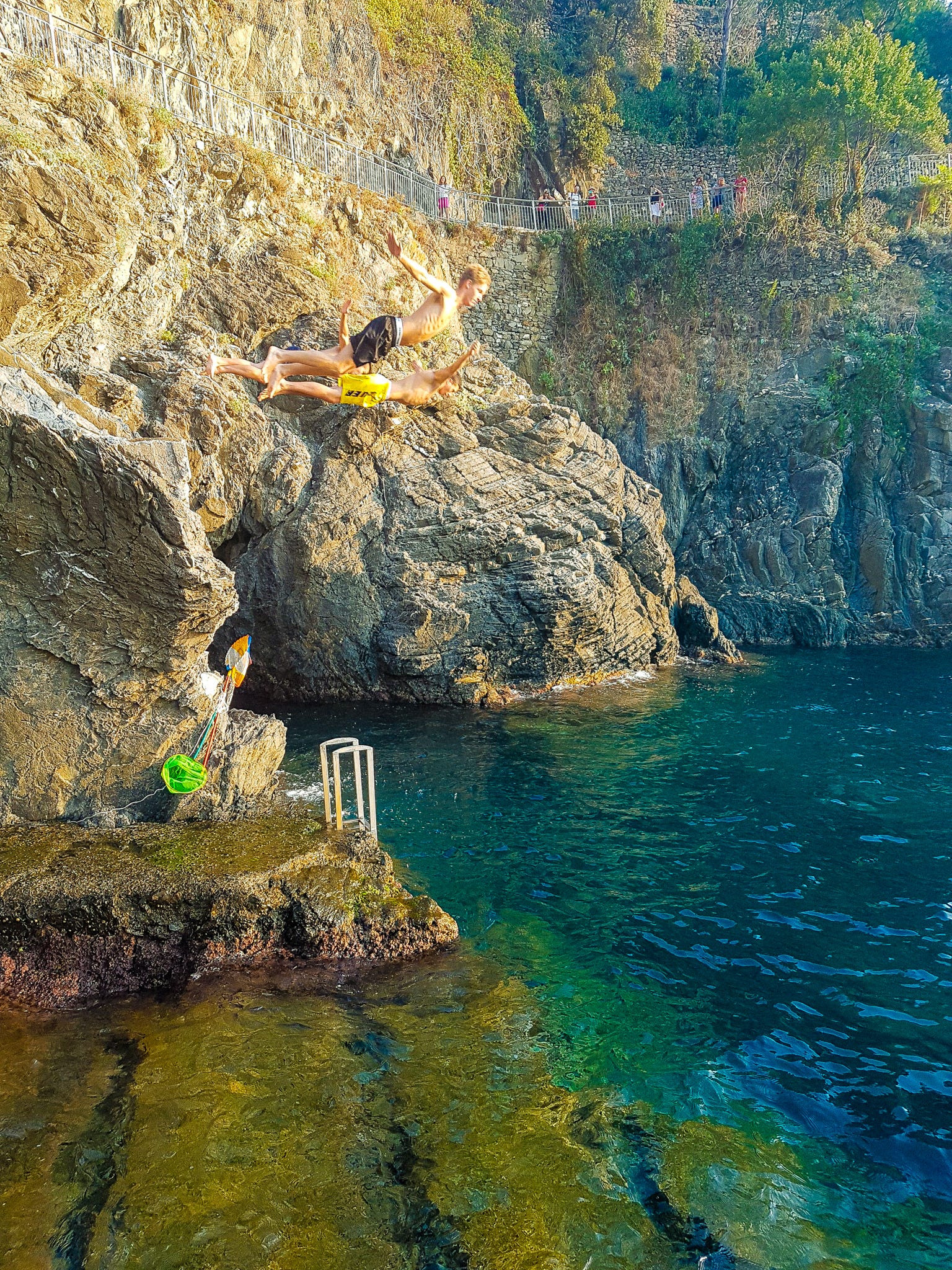
In this climate, waterfront cities are rising. As the world heats up, we seek spaces to cool down — rivers, lakes, oceans, seas: we’ll take it.
We’re seeing a boom in waterfront living worldwide. But it comes with a cost — flood risk, uninsurable homes, ever higher property prices in highly unequal coastal towns. Living by the water is no longer just about its wonders. It’s about knowing how to read its temperament — its dark side as well as its joys. Something swimmers, sailors and surfers have hardwired in through spending time in, on, under and by the water.
Perhaps we all need a new water knowledge.
Enter watersports.
From a surf before school to a sunset swim, we know the beauty and freedom of waterside living. At The Place Bureau, many of us grew up this way — from the bracing south coast of England to the endless blue of the Greece’s Mediterranean shores. Swimming wasn’t just a hobby but a birthright. And from our very first project in London’s Silvertown, we’ve been championing play by the water as a way of life, and a mode of shaping the future of cities.


Reborn as a riviera
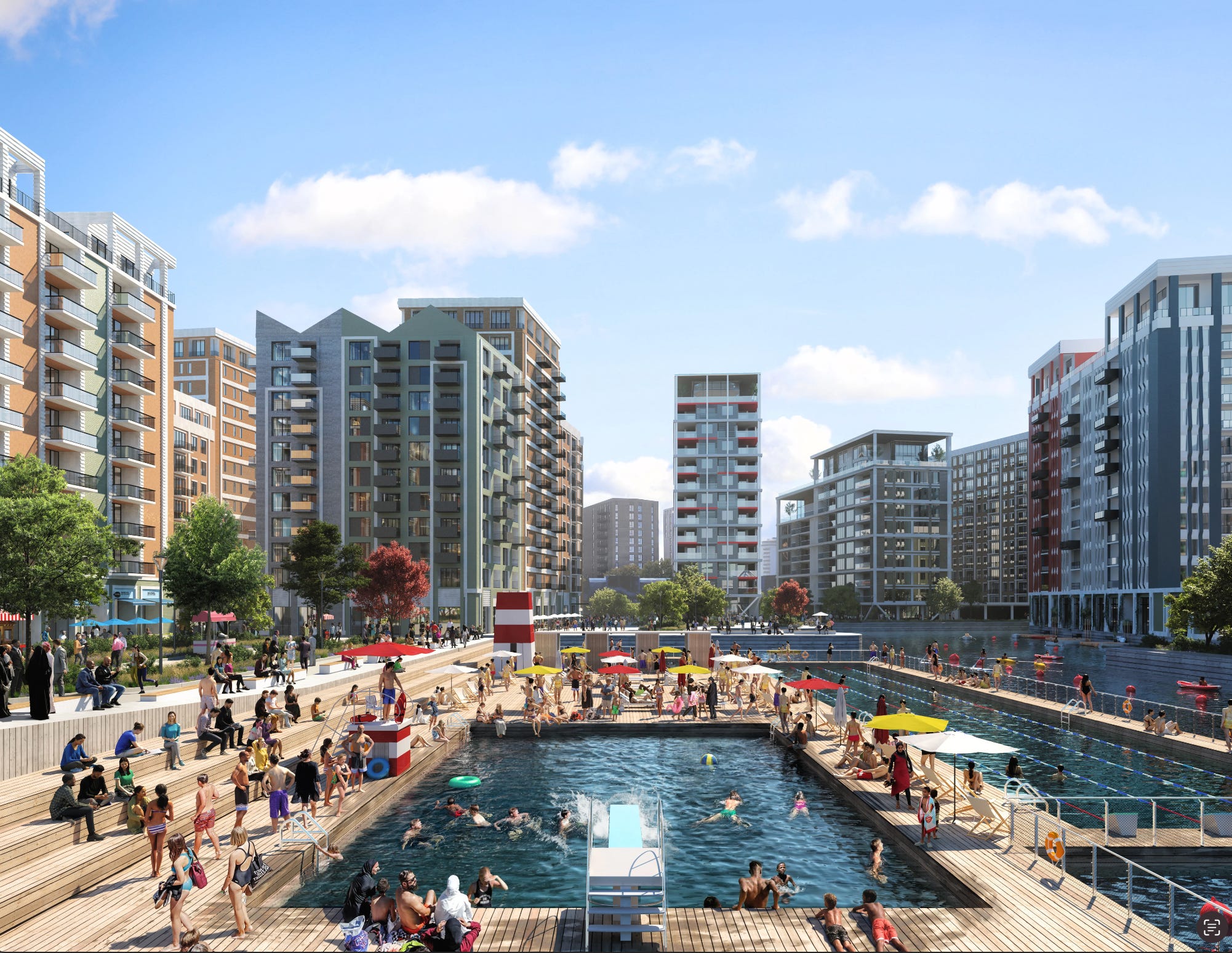
Silvertown, in London’s Royal Docks, boasts a body of water the size of New York’s Central Park. The team developing the site wanted to know how to work with such an amazing asset in a city that long aligned docks with industry and lacked confidence in being by the water. How could the site reinvent itself as a destination for leisure and waterside living?
We ran a three-day on-site charrette inviting hundreds of people to get closer to the water on a site that had never before been accessible to the public. We brought in brilliant water champions like Nathaniel Cole, founder of Swim Dem Crew, who understand how water can build community and confidence, inspiring the team to build a place where a culture of urban swimming could widen the appeal of a place for many more Londoners.
The result? Seven years on, a dedicated quarter, Pontoon Dock, designed by the team at Prior + Partners, will transform London’s relationship with its water through easy access to kayaking, paddle boarding, and swimming clubs. Unlocking watersports is core to adding value to a site with an estimated development value of around £5 billion. What was once the largest docks on the planet has been reborn as London’s Riviera, with watersports at its heart
Water can bring new life to a place. But we need to know how to handle it.
Life or death
Building confidence in the water can mean the difference between life or death.
In the record-breaking UK heatwave this May, at least 20 people died in the water in a single week — 14 of them children. Water safety experts called on the government to treat drowning as a public health disaster. As temperatures climb, people will head to the water whether we plan for it or not. The question is whether they arrive with the skills, the confidence and the infrastructure to survive it — and to love it.
The appetite is unmistakable. Regular open water swimming in the UK has more than doubled in under a decade — from around 266,000 people in 2016 to over 540,000 today — with more than four million adults taking to lakes, rivers and seas each year, a movement led overwhelmingly by women. What began as a lockdown lifeline has become a way of life: cold water as clarity, community and communion with the seasons.
And people aren’t only going to the water to cool down. They’re going to get well.
The big blue as medicine
Being in fresh or saltwater is brilliant for health — mental and physical. Working on the Isle of Wight’s Bay Area place plan, we came across the brilliant Swim the Wight, a social enterprise who aim to make swimming in the seas around the Isle of Wight as accessible, safe and enjoyable as possible. Among other events, they teamed up with the NHS to offer sea swimming to support cancer survivors — building community and solidarity, and finding respite in the big blue.
We’ve seen the same devotion in climates as cold as Snæfellsnes, Iceland, where we came across the wild swimming club of Stykkishólmur, slipping into Arctic waters as a matter of course. Wherever there is water and a way in, people will build a ritual around it — and then a community around the ritual.
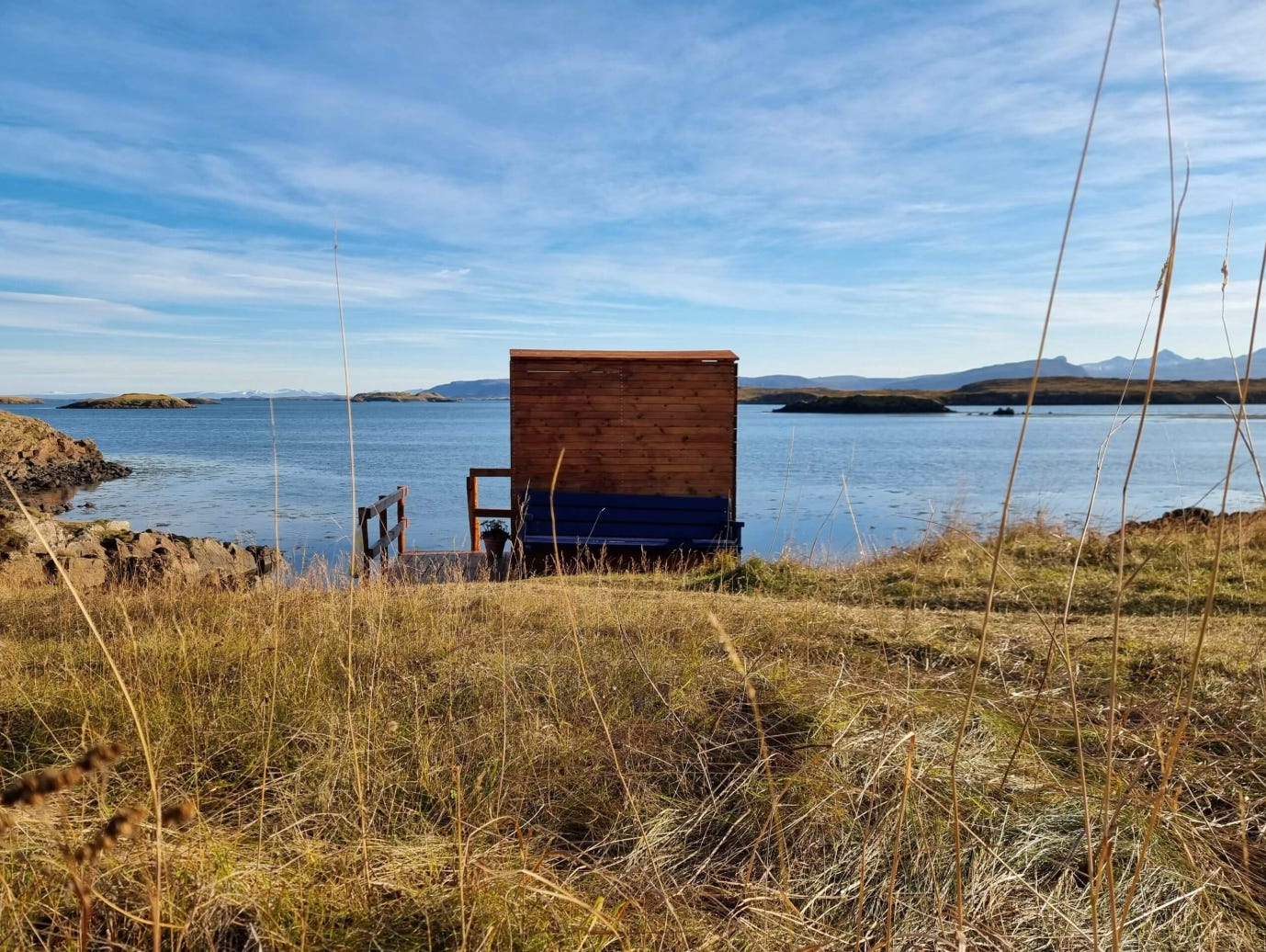
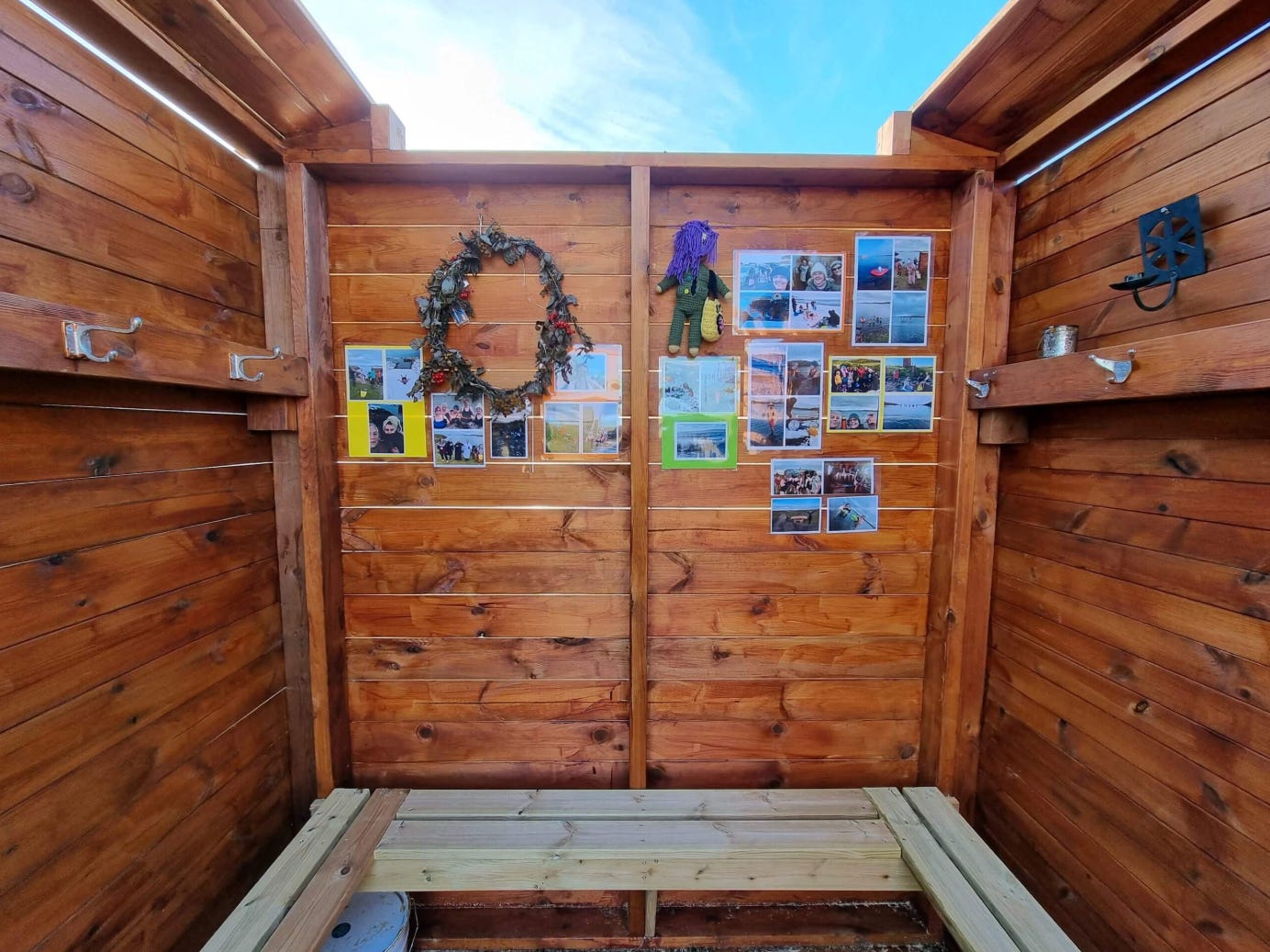
This is where swimming goes bigger than sport: it starts a new civic infrastructure. Every swim spot generates its own gravity. In cold climates, saunas and changing huts, places to warm up and linger, coffee vans and clubhouses, the rituals of towelling off and talking. In warmer climes, spaces to shade, restaurants, cafes, and nightlife. These are third places in the truest sense: free-flowing, intergenerational, no membership required beyond the willingness to get in. The knock-on effects ripple outwards — better mental health, stronger social ties, safer waters watched over by the people who use them daily.
And where swimmers gather in numbers, the city around them starts to change.
The city learns to swim
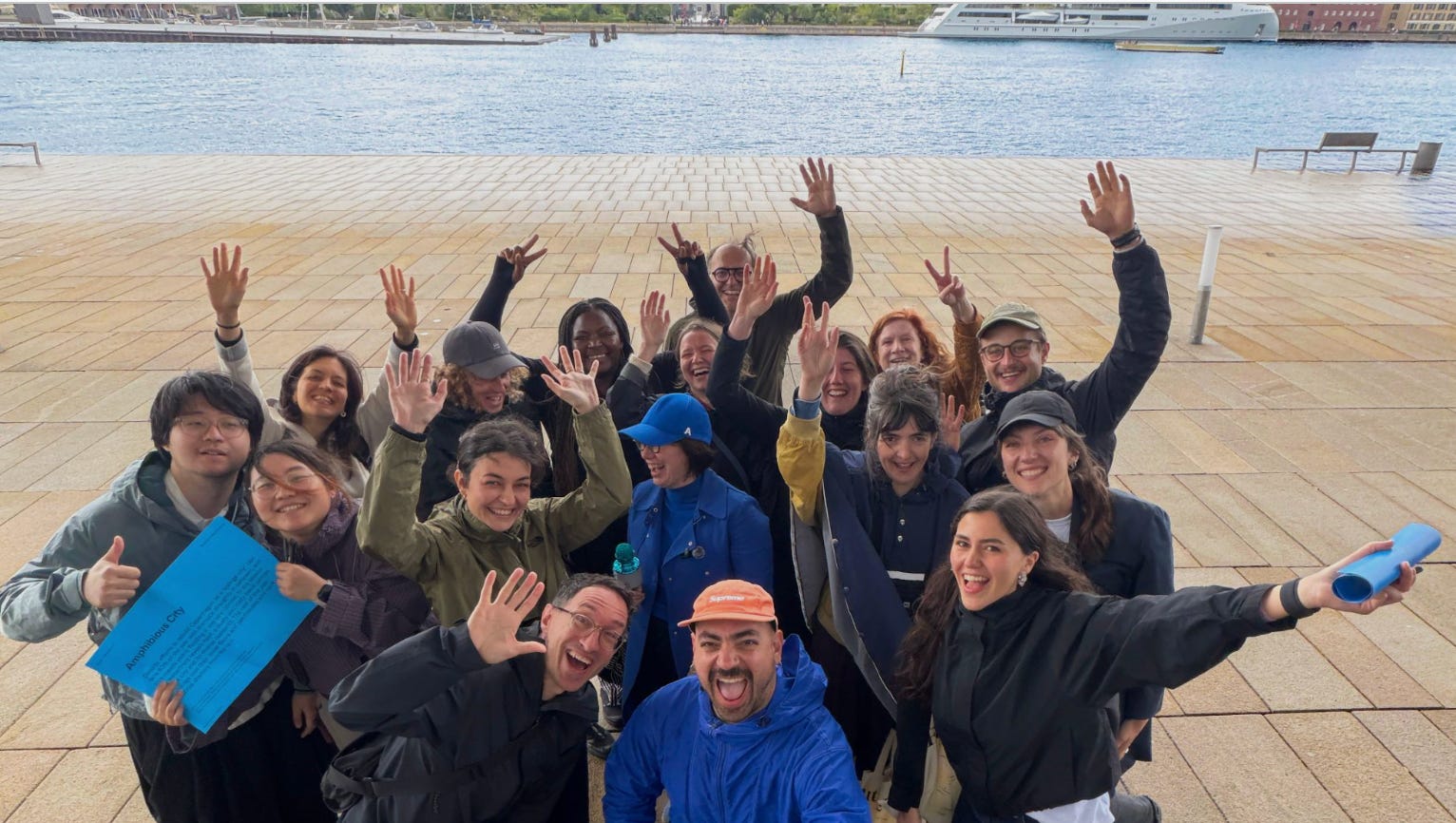
Swimming has been the signal of transformation in Copenhagen’s harbourfront — a symbol of the city having cleaned up its act, and of the new role the harbour took in generating income and civic pride. Taking Danish design-eye to new harbour baths, brought an symbolism to the architecture of the everyday. In June, we returned to that harbour to run our Waterfront Worldbuilding workshop at Future Days Festival with The School of Critical Design — inviting people to tune into the waterside, explore future scenarios, and broadcast back from the futures they imagined. A little cold to swim on that day, but kayakers and sailors bobbed by.
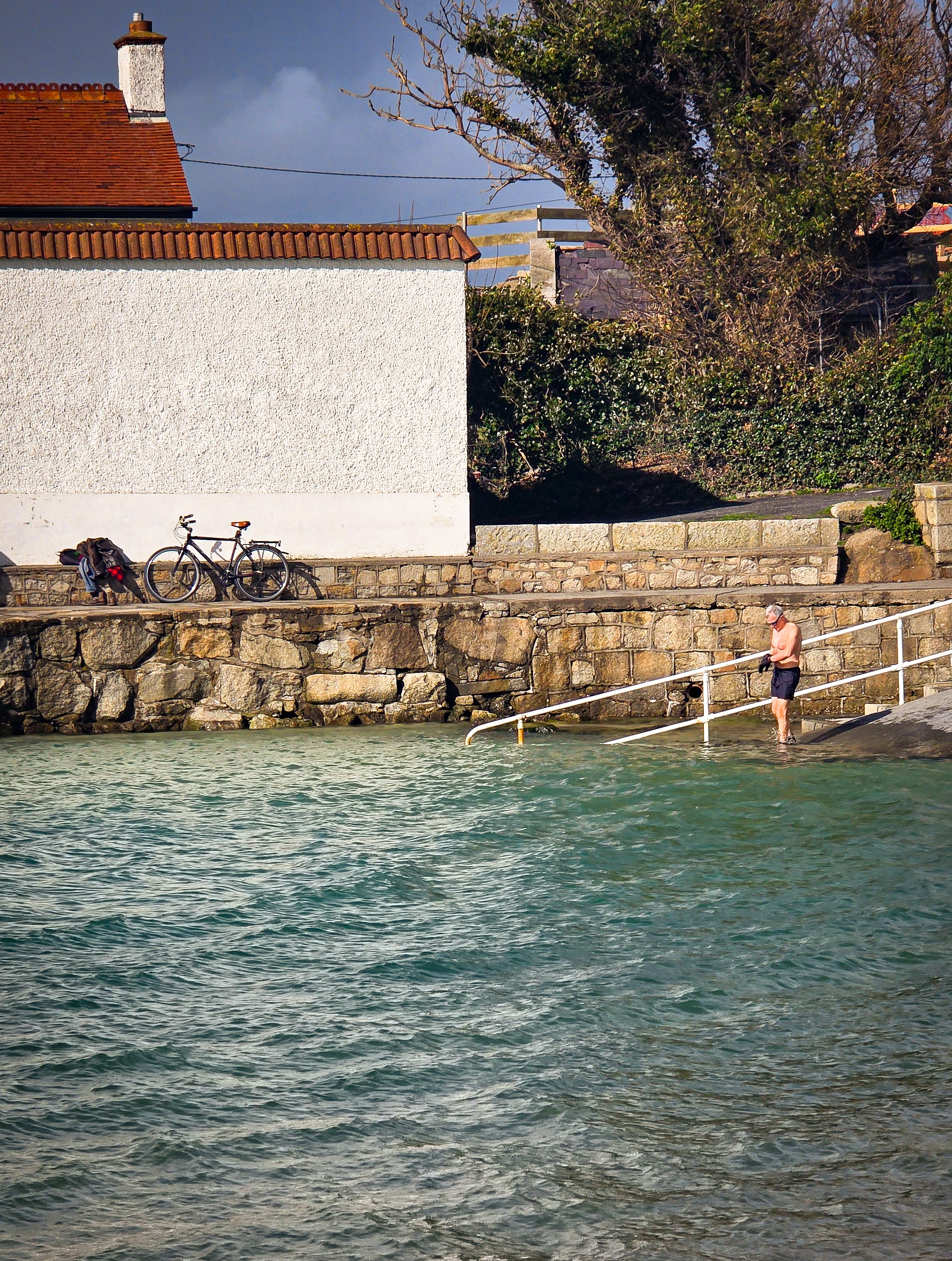
What Copenhagen symbolises, Dublin is turning into a regional strategy. Alongside other watersports, wild swimming could be at the heart of an entire coastal economy, attracting visitors from all over the world to match fierce local pride. We’re working with Fáilte Ireland and Group Nao to reposition the city as Dublin’s Capital Coast — exploring how design can improve the existing sea swimming infrastructure, where hardy locals still jump in at the first sign of sun before a dark cloud reappears. The silver lining? A seascape redolent with rainbows.
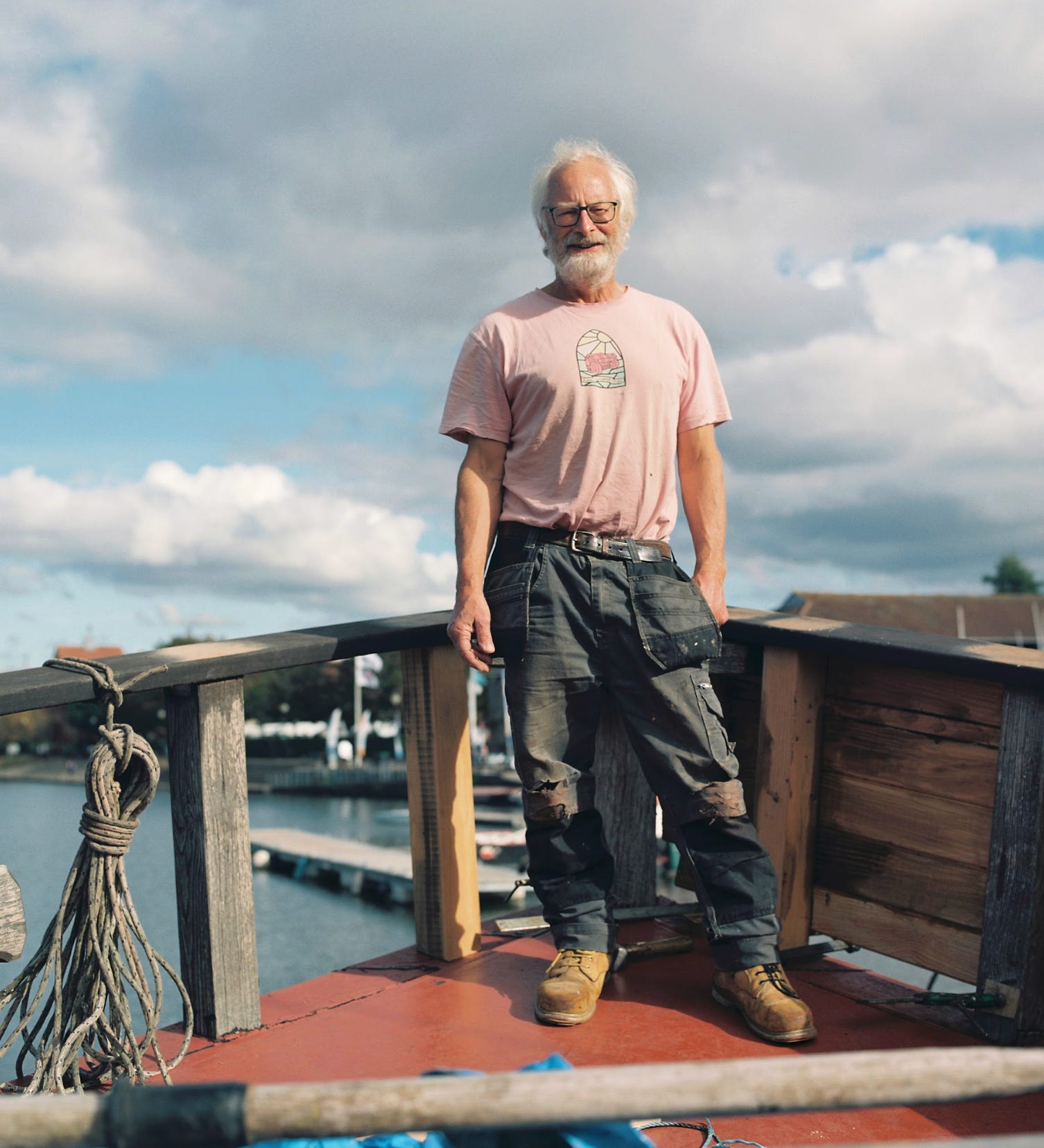
Not every city has it so easy. In working harbours, swimming remains a genuine challenge: in Bristol’s Western Harbour we worked with local communities on the vision, including watersports champions — and while sailing and rowing are possible, safe swimming is still out of reach in such busy waters, even as the public lobby for it.
It’s perhaps fitting that staying fluid and flexible can be a great way to test new futures for waterside sites. Watersports can be a brilliant approach to meanwhile use — think of the King’s Cross Pond Club, a 40m natural pool that drew crowds to a now well-loved site while it was still under construction. We imagine something similar in central Southampton, where we worked on the Renaissance Masterplan with Prior + Partners. The city was once home to a huge, central much-loved lido, closed in the 1970s. Emblazoned with motto ‘SWIM TO BE FIT, BE FIT TO SWIM AND BATHE IN WATER FIT TO DRINK’, its memories offer an enormous opportunity to bring water, health, and leisure back again, to city centre.
The model is thriving elsewhere. Sea Lanes in Brighton — the UK’s first National Open Water Swimming Centre — has just brought its floating 50-metre pool to London’s Canary Wharf, opening this June in Eden Dock: natural water, year-round swimming, saunas on the boardwalk, skyscrapers overhead. Coined as London’s new oasis for open water swimming, sauna and social hangouts by the water, its proof that even the most corporate waterfront can learn to take the plunge.
Which raises the question sitting underneath all of this: who does the water belong to?
Sovereignty over seas
Sovereignty over our seas is a form of self-governance — and of community health. In Adur & Worthing, coastal towns on England’s south coast, our work with Ideas Alliance and local people to imagine their future surfaced a clear priority — not housing, not transport, but a clean sea, so that people can swim, surf and paddle again. Read more about that work here.
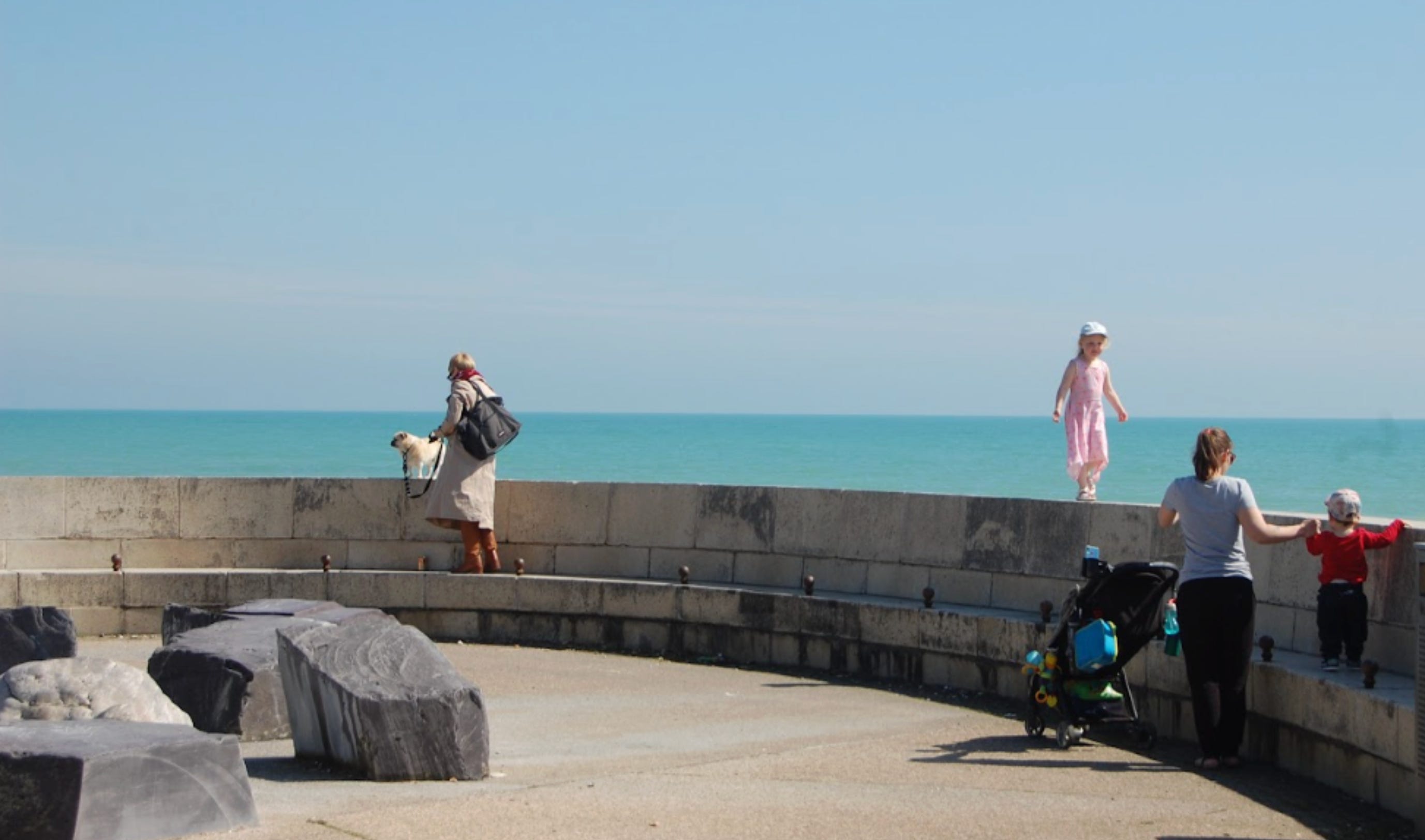
Swimmable water, it turns out, isn’t an amenity. It’s a right. And it’s a right that cities all over the world are beginning to reclaim — each in their own dialect.
Postcards from a swimmable planet
Barcelona wrote the founding myth. For the 1992 Olympics, the city tore down the industrial waterfront that had walled it off from the Mediterranean and built beaches where the barriers had been — turning the city to face the sea for the first time in a century, and rewriting its entire identity and economy in the process. Every waterfront regeneration since owes it a debt.
Paris just pulled off the sequel. After a €1.4 billion cleanup for the 2024 Olympics, the Seine reopened to public swimming in summer 2025 for the first time in a hundred years — around 100,000 people took the plunge in that first season, and this summer the three bathing sites are back, with more along the Marne. Paris’ canals went wild with swimmers in the latest heatwave, establishing this as a city that dived right into this new way of life.
New York is still mid-stroke. The + POOL, a plus-shaped floating pool designed to filter East River water through its own walls, has been fifteen years in the making: a saga of permits, protocols and sheer stubbornness. The pilot pool is in the water now, aiming to welcome swimmers by 2027. Floating river baths were common in New York until pollution closed them in 1938; + POOL is less an invention than a homecoming.
Seoul reveals the democratic version. Every summer, six open-air pools and water playgrounds open along the vast network of Han River parks — a couple of thousand won (under $5) to get in, night swimming under the city lights, as summer evenings are becoming prime swimming hours. Millions of citizens cooling off in the heart of a megacity.
And you? Where do you see the future of swimmable cities being written — the harbour bath, the river pool, the reclaimed dock, the campaign that hasn’t yet won? Tell us in the comments where we should go next, goggles in hand..
Swimmability is the new walkability
If you thought walkability was essential to urban futures, in a world that’s getting hotter — think swimmability.
That’s the conversation we’ll be diving into at the Swimmable Cities European Forum in Basel, 11–12 August, where The Place Bureau’s Partnerships Lead Sarah Farwell joins the Urban Strategy workshop alongside the City of Basel’s Head of Spatial Planning, Mideri Architects, Urban Agency and Flussbad. We’ll be sharing our research and live projects in waterfront cities and regions around the world.
Life in the city heating up? Come find your cool with us in Basel. Or if your city is ready to embrace the water, let’s dive in together. Get in touch and comment below